


| Program Type | Workshop | Residency |
| Art Form | Literary Arts & Storytelling |
| Curriculum Connections | STEM | Language Arts / Literacy |
| Target Grades | 1 | 2 | 3 | 4 | 5 | 6 | 7 | 8 |

View Artist & Programs
Testimonial
"Miss Doe Boyle, this is already the best day of my life."
— Zhane Owens, Fourth Grader
University of Hartford Magnet School, West Hartford, CT
— Zhane Owens, Fourth Grader
University of Hartford Magnet School, West Hartford, CT
Description
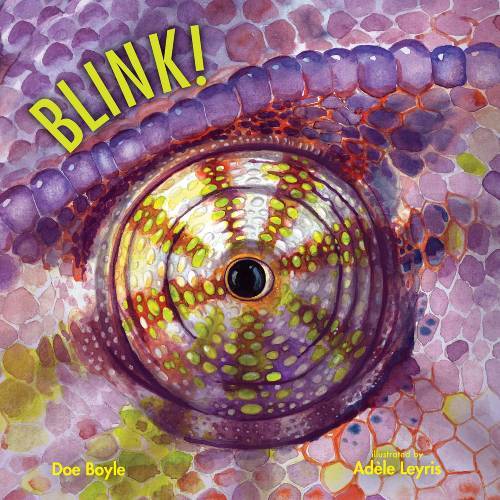
Let’s find out how animals see! Join Doe Boyle for a poetic exploration of the remarkable ways that animal eyes help each species focus on what they need to ensure their survival. This interactive STEAM-centered workshop introduces elements of vision and eye structure to learners in Grades 1 through 5. In this workshop, I will share the story of how I came to write my science poetry book , BLINK!, about animal eyesight and eye structure; how I researched each animal; what I discovered that most surprised me; and how I created poetic text to describe each creature.
Objectives
With students, I will explore an anatomical model of a human eye and will discuss the ways in which the eyes of every creature contribute to its survival. I will provide links to activity sheets, films, and online resources and books that will align my visit with Next Generation Science Standards on the human body, particularly the eye/brain/musculoskeletal systems. Students will create original writing and illustrations that explore the eyesight or eye structure of a creature of their choosing.
Pricing Information
$880 for 4 workshops per day.
Program Length
45-60 minutes per class
3-5 sessions
3-5 sessions
Participants
15-35 students per classroom
Technical Specifications
• Audiovisual/Tech: Standard classroom audiovisual equipment
• Venue-Provided Supplies: Paper, pencils, colored pencils, markers, watercolor paints, collage materials, scissors, yarn, string, natural twigs, stage props, and glue sticks are often among the necessary supplies.
• Venue-Provided Supplies: Paper, pencils, colored pencils, markers, watercolor paints, collage materials, scissors, yarn, string, natural twigs, stage props, and glue sticks are often among the necessary supplies.