


| Program Type | Teacher Professional Development |
| Art Form | Music |
| Curriculum Connections | STEM | Social and Emotional Learning |
| Target Grades | Adult |

View Artist & Programs
Testimonial
"This is honestly the most useful (and fun!) professional development I've ever been to. Emmy know science and she knows kids. I will totally use these lessons in my classroom"
-Sheri, Pre-K teacher, Bloomington, IN.
-Sheri, Pre-K teacher, Bloomington, IN.
Description
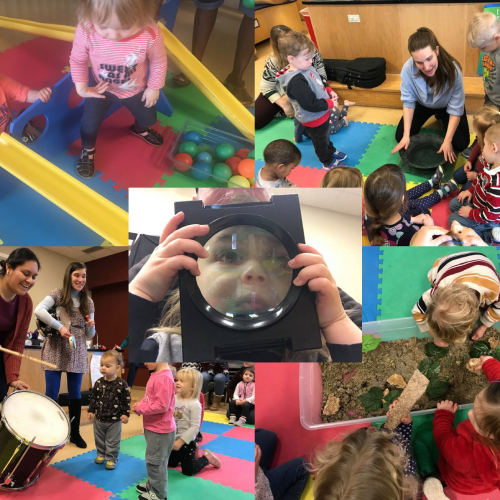
This presentation is designed for early childhood educators (teaching children ages 0-8) and covers the dos and don’t of exploring science in classrooms, libraries, child care centers, and museums. This PD was developed in collaboration with scientists at a top tier research institute (Indiana University) and early childhood experts at the Association for Science and Technology Centers. This hands-on presentation aims to highlight and deepen the science learning educators already engage in, and share fundamental research-based pillars of science education. Participants should expect to see, test, and explore various arts-integrated STEM experiments and materials they can use in their classrooms.
Objectives
- Educators will walk away with 6-8 concrete arts-integrated science activities they can use in their classrooms with minimal materials and low cost.
- Educators will be able to see and deepen the things they are already doing in their classrooms that have connections to science.
- Educators will have a set of principles they can use to identify and evaluate high quality science programming for their classrooms/institutions.
- Educators will be able to see and deepen the things they are already doing in their classrooms that have connections to science.
- Educators will have a set of principles they can use to identify and evaluate high quality science programming for their classrooms/institutions.
Pricing Information
One Workshop: $660
Back-to-Back: $955
Back-to-Back: $955
Program Length
45-60 minutes
Participants
up to 75
Technical Specifications
• Set Up: 20-30 minutes
• Break: 10 minutes minimum, one hour maximum
• Strike: 10 minutes
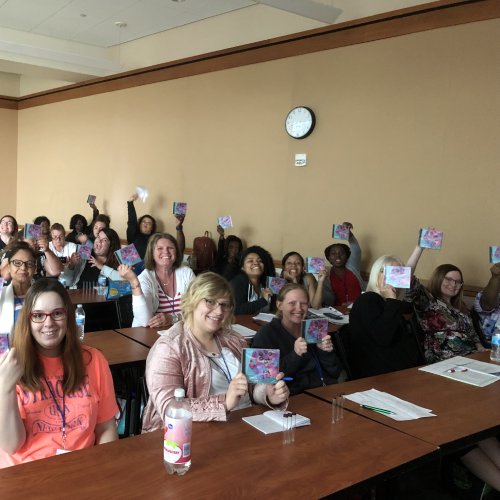
• Program Space: It is best to have the participants seated at tables (so they have space in front of them to explore some experiments). If needed, it also works to have them seated in rows.
• Electricity/Wi-Fi: No specific electricity or wi-fi needs (aside from projector/screen)
• Audiovisual/Tech: I will need a projector/screen/TV and a way to connect my Apple laptop. If the room is large, a microphone is appreciated. It can be hand-held or hands-free.
• Tables/Chairs: A table for materials
• Mobility/Location Needs: For this program I bring my materials in a large plastic bin on a rolling hand-cart, so ideally I can access the performance space with a ramp or elevator. I can move from space to space, but prefer to stay in one room. Parking nearby is appreciated.
• Break: 10 minutes minimum, one hour maximum
• Strike: 10 minutes
• Program Space: It is best to have the participants seated at tables (so they have space in front of them to explore some experiments). If needed, it also works to have them seated in rows.
• Electricity/Wi-Fi: No specific electricity or wi-fi needs (aside from projector/screen)
• Audiovisual/Tech: I will need a projector/screen/TV and a way to connect my Apple laptop. If the room is large, a microphone is appreciated. It can be hand-held or hands-free.
• Tables/Chairs: A table for materials
• Mobility/Location Needs: For this program I bring my materials in a large plastic bin on a rolling hand-cart, so ideally I can access the performance space with a ramp or elevator. I can move from space to space, but prefer to stay in one room. Parking nearby is appreciated.