


| Program Type | Workshop |
| Art Form | Visual Arts |
| Curriculum Connections | STEM | Play-Based Learning |
| Target Grades | K | 1 | 2 | 3 | 4 | 5 | 6 | 7 | 8 | 9 | 10 | 11 | 12 | Adult | Higher Education | Family |

View Artist & Programs
Testimonial
"I learned a ton! Jay is able to weave in scientific and engineering principles in such a subtle way that the students didn't even realize they were learning."
-Keeley Lombardi, 4th Grade Teacher, Burkland E.S., Middleborough, MA
"I would absolutely recommend this program to others. Jay was engaging, knowledgeable, and did a wonderful job encouraging the students while also giving very helpful feedback and suggestions."
- Jillian Bennett, Children's Librarian, Harvard P.L., MA
-Keeley Lombardi, 4th Grade Teacher, Burkland E.S., Middleborough, MA
"I would absolutely recommend this program to others. Jay was engaging, knowledgeable, and did a wonderful job encouraging the students while also giving very helpful feedback and suggestions."
- Jillian Bennett, Children's Librarian, Harvard P.L., MA
Description
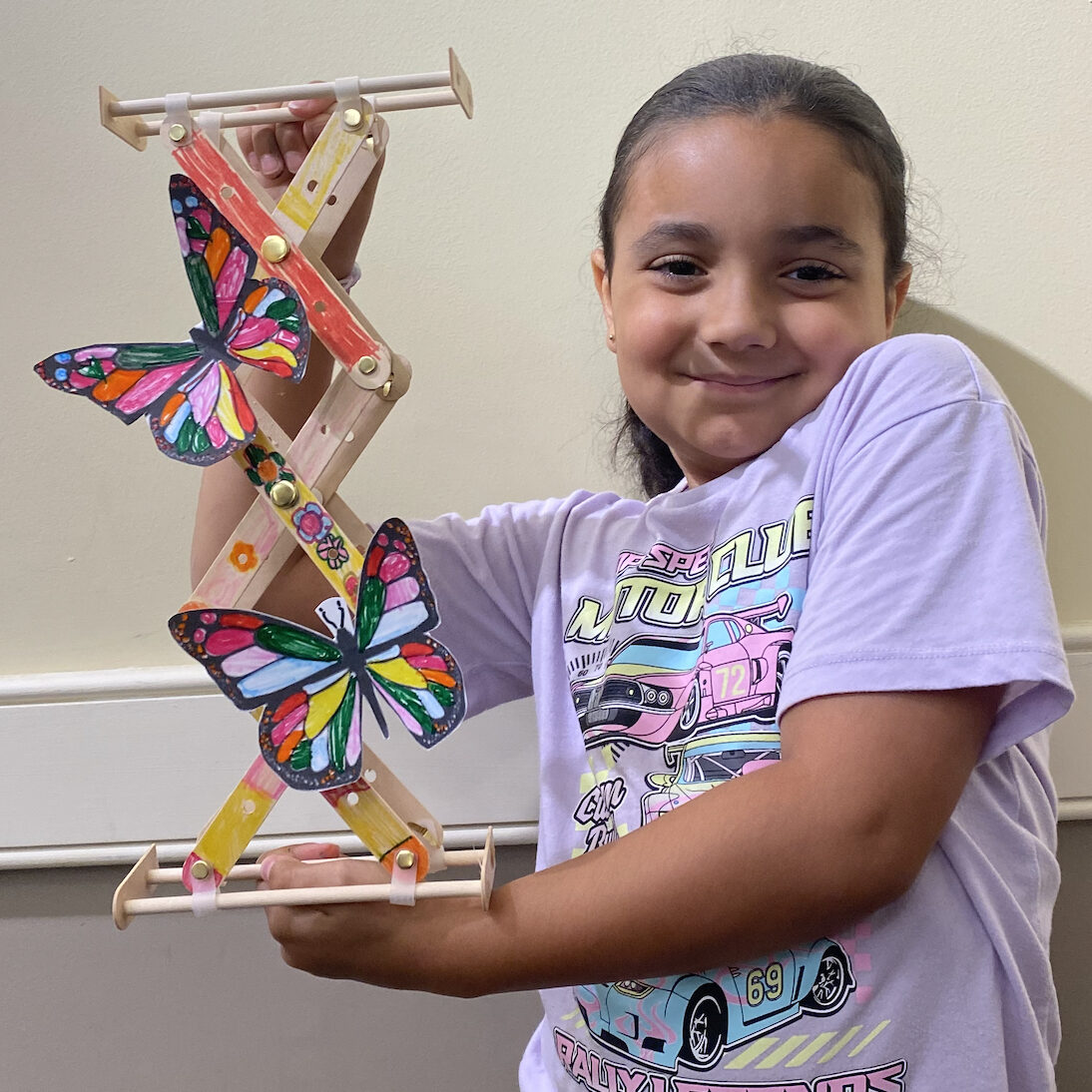
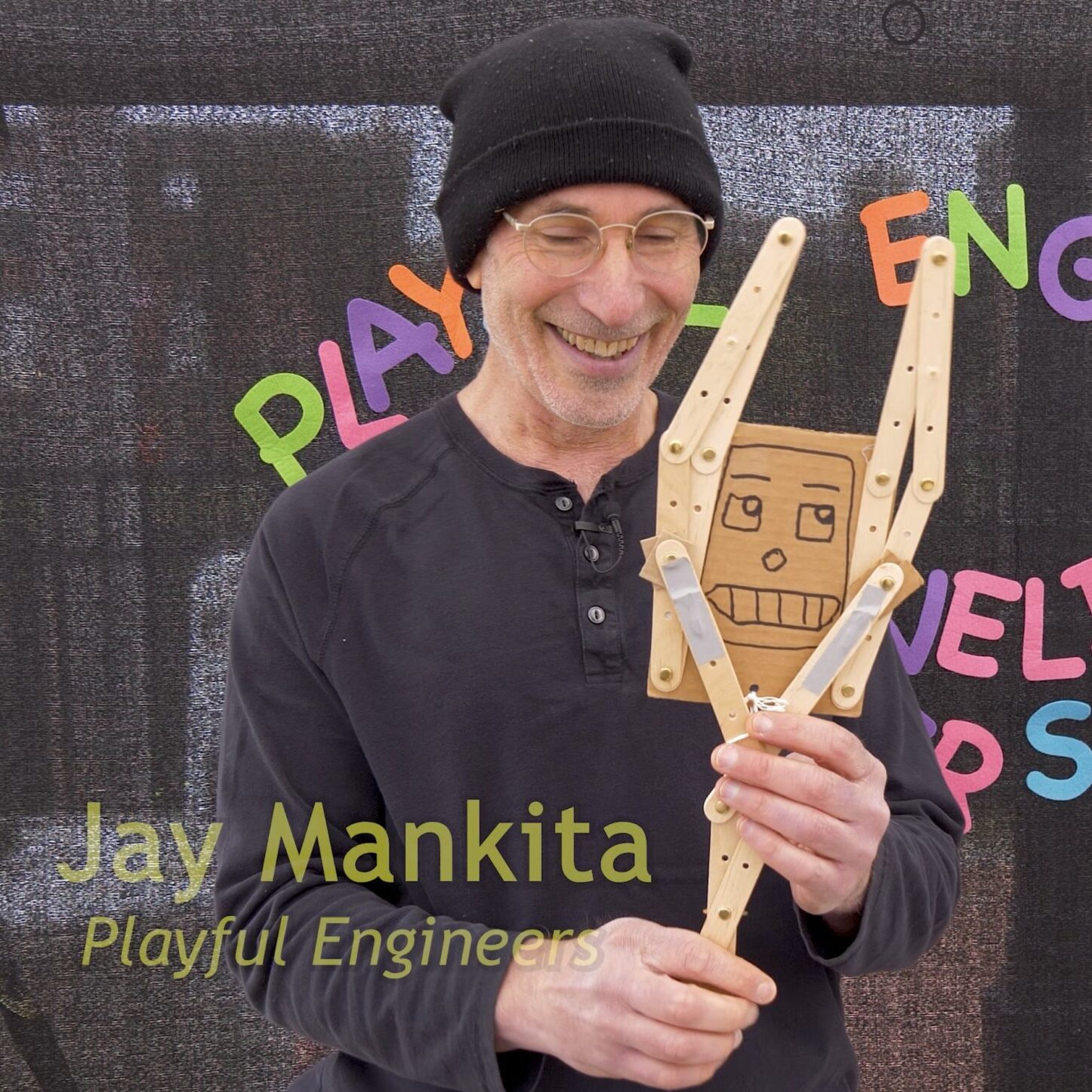
In this open-ended, play-based session, students build artful mechanisms that can send a message, tell a story, accomplish a task, or bring a character to life. As they build, they create their own designs to overlay their mechanisms. This Artful Mechanisms session focuses on mechanical linkages.
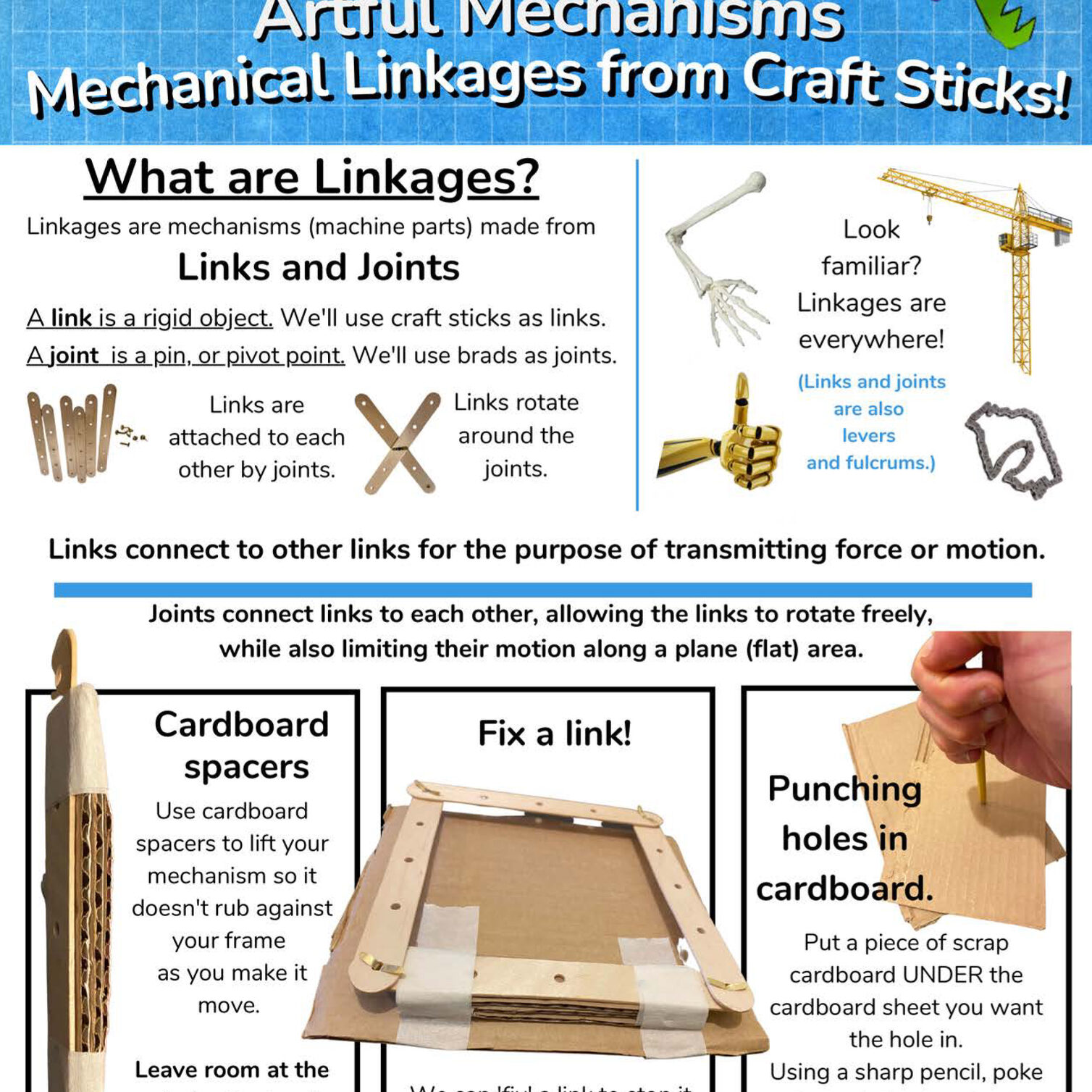
Linkages are everywhere – in machines, and in art, architecture, and nature – even in our own bodies. Becoming familiar with them strengthens our understanding of mechanical processes, as well as engineering and design.
Students can make one or more mechanisms, choosing from three types of classic linkages - scissor, reverse motion, and parallel. They'll make extraordinary use of ordinary materials such as craft sticks, cardboard, brass fasteners, and masking tape.
This is a 'make and take' program; students keep their creations. We supply all materials.
Linkages are everywhere – in machines, and in art, architecture, and nature – even in our own bodies. Becoming familiar with them strengthens our understanding of mechanical processes, as well as engineering and design.
Students can make one or more mechanisms, choosing from three types of classic linkages - scissor, reverse motion, and parallel. They'll make extraordinary use of ordinary materials such as craft sticks, cardboard, brass fasteners, and masking tape.
This is a 'make and take' program; students keep their creations. We supply all materials.
Objectives
Students will connect art with engineering through hands-on participation as designers & makers. They’ll enhance tinkering skills, and build confidence in their abilities as makers, as they experience form arising from function, and vice versa.
As this is an open-ended, play-based, student driven project, students explore their curiosity and express their creativity individually, and at their own pace, and level of skill and comprehension, in a non-competitive, socially fun setting with their peers.
As this is an open-ended, play-based, student driven project, students explore their curiosity and express their creativity individually, and at their own pace, and level of skill and comprehension, in a non-competitive, socially fun setting with their peers.
Pricing Information
$880 -Two workshops (Single available at same price)
$1,175 - 3 workshops
$1,470 - 4 workshop
$2/student materials cost.
Session lengths, and # of session/participants are flexible, and can be negotiated with the artist, according the needs of your school
$1,175 - 3 workshops
$1,470 - 4 workshop
$2/student materials cost.
Session lengths, and # of session/participants are flexible, and can be negotiated with the artist, according the needs of your school
Program Length
60 minutes each for 4 workshops in 1 day
up to 90 minutes for 3 or less workshops in 1 day
up to 90 minutes for 3 or less workshops in 1 day
Participants
up to 2 classrooms per session
Technical Specifications
• Set Up: 1 hour
• Break: 15 minutes if possible
• Strike: 30-60 minutes
• Program Space: This workshop can take place in a classroom or larger space.
• Electricity/Wi-Fi: Wi-Fi password please
• Tables/Chairs: Teaching artist will need some extra tables to lay out materials and demo models. Ideally, at least 3 extra tables (without extra chairs), but 6 if you've got them, and there's room. Students will need tables and chairs to work.
• Outside Possible: Yes, but totally dependent on weather. Materials and tools can't get wet. Windy days are hard because we're using a lot of paper, and lightweight materials. Given that, if the weather is nice, that can be very nice.
• Mobility/Location Needs: We travel with a 4 foot cart and can load everything in one trip into the school. So we need the smoothest entry, not necessarily the closest. We definitely prefer one room for multiple programs, as set up and strike take a bit of time.
• Break: 15 minutes if possible
• Strike: 30-60 minutes
• Program Space: This workshop can take place in a classroom or larger space.
• Electricity/Wi-Fi: Wi-Fi password please
• Tables/Chairs: Teaching artist will need some extra tables to lay out materials and demo models. Ideally, at least 3 extra tables (without extra chairs), but 6 if you've got them, and there's room. Students will need tables and chairs to work.
• Outside Possible: Yes, but totally dependent on weather. Materials and tools can't get wet. Windy days are hard because we're using a lot of paper, and lightweight materials. Given that, if the weather is nice, that can be very nice.
• Mobility/Location Needs: We travel with a 4 foot cart and can load everything in one trip into the school. So we need the smoothest entry, not necessarily the closest. We definitely prefer one room for multiple programs, as set up and strike take a bit of time.